Skip to content

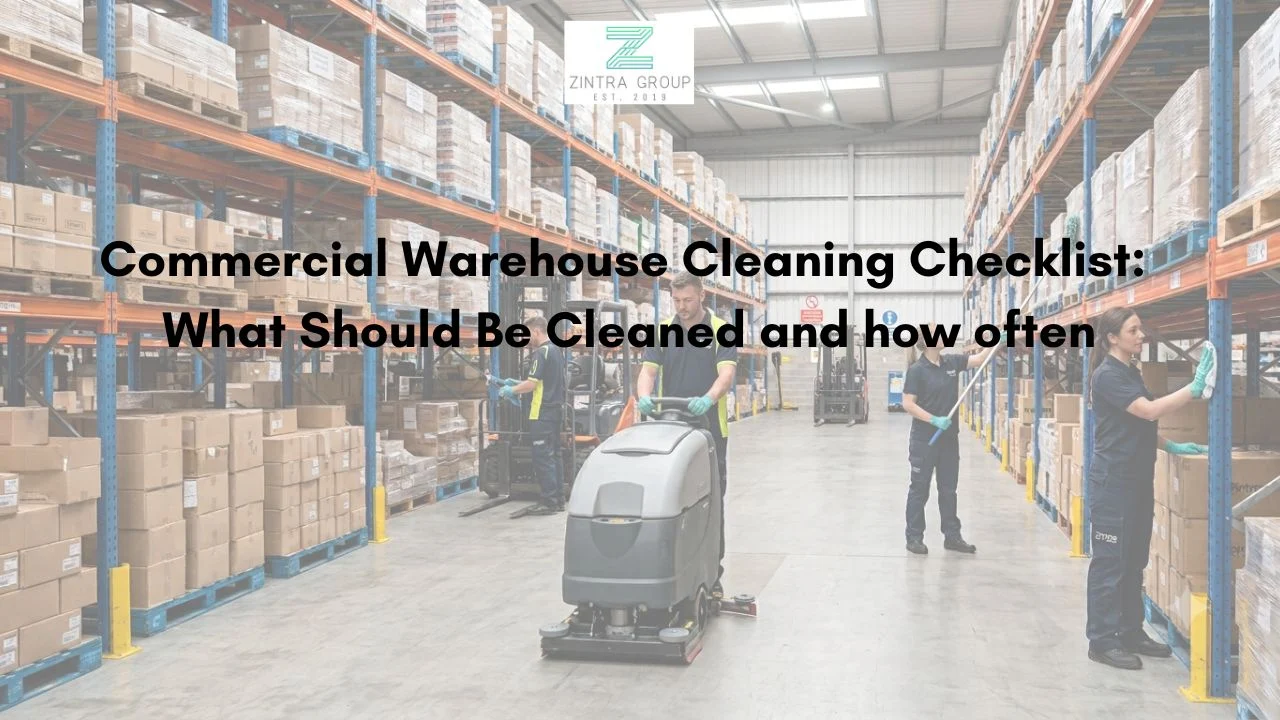
Most warehouse cleaning problems don’t come from neglect, they come from an unclear scope. A facility manager assumes the cleaning contractor is covering high dusting and loading dock areas, while the contractor assumes those were never part of the agreed schedule. Commercial warehouse cleaning works best when there’s a clear checklist of what gets cleaned, how often, and who’s responsible for flagging issues in between visits. Without that clarity, dust builds up on racking, grease accumulates near machinery, and small maintenance issues turn into safety or compliance problems before anyone notices.
Building a Cleaning Schedule That Matches How the Warehouse Actually Runs
A generic cleaning schedule rarely fits a real warehouse. Distribution centres running multiple shifts need a different rhythm than a storage facility with low foot traffic. The right approach starts with mapping out which areas see heavy use daily and which only need attention monthly, then building the checklist and frequency around that, rather than applying the same schedule to every space regardless of how it’s actually used.
Daily and Weekly Tasks
Floor sweeping in high-traffic zones, bin and waste removal, and spot-cleaning spills near machinery or loading areas typically need daily attention in active warehouses. Weekly tasks usually include mopping or scrubbing walkways, wiping down workstations, and checking communal areas like staff rooms and amenities. These are the tasks that keep a warehouse safe and presentable day to day, and skipping them is usually what leads to slip hazards or visible grime buildup within a matter of weeks.
Daily cleaning should account for individual warehouse zones rather than focusing only on the main floor. Racking aisles need attention where dust, packaging fragments and loose debris collect around stored goods. Loading dock edges also require regular checks because vehicle movements and freight handling can leave dirt and residue near entry points. Amenities and staff areas should be included in weekly routines, while waste areas need consistent attention to prevent overflowing bins and scattered packaging from affecting surrounding workspaces.

Monthly and Quarterly Tasks
High dusting of racking, ceiling beams, pipes, and light fittings is best handled monthly, since dust in these areas builds up slowly but creates real air quality and fire risk issues over time. Loading dock cleaning, including degreasing and pressure washing of dock areas exposed to vehicle traffic, usually fits a monthly or quarterly cycle depending on volume. Window and skylight cleaning, along with deep cleaning of less-used storage zones, typically falls into a quarterly rhythm as well, since these areas don’t accumulate dirt as quickly as main floor space.
Less frequently used areas still need attention, even when they do not show obvious signs of dirt. Monthly high dusting should consider upper racking levels, ceiling structures, pipes and light fittings where accumulated dust can go unnoticed. Loading dock degreasing should address residue associated with vehicle movements and freight handling, with the cleaning frequency reflecting site activity. Quarterly cleaning can also include less-used storage zones, windows and skylights, helping prevent overlooked areas from gradually becoming neglected parts of the facility.
Floor Care Based on Surface Type
Concrete, epoxy, and sealed floors all respond differently to cleaning methods, and treating them the same way shortens their lifespan. Epoxy floors generally need scrubbing with the correct pH-balanced solution to avoid damaging the coating, while bare concrete can handle more aggressive scrubbing and degreasing without the same risk. A proper commercial warehouse cleaning checklist specifies the floor type for each zone, since using the wrong method on a coated floor often costs more to repair than the cleaning saved in the first place.
Compliance-Driven Cleaning Tasks
Some cleaning tasks exist specifically to meet WorkSafe Victoria requirements rather than general tidiness. This includes clear access to fire exits and extinguishers, controlled dust levels around machinery, and documented cleaning records that can be produced during an audit. Zintra Group builds these compliance checks into scheduled visits rather than treating them as a separate service, since most facility managers don’t have the time to track two different cleaning systems running in parallel.
Who Flags Issues Between Visits
Cleaning responsibilities should be shared between the facility’s nominated supervisor and the cleaning contractor. Warehouse staff and supervisors are often best placed to notice new spills, overflowing waste areas, dust accumulation or debris between scheduled visits. These issues should be reported to the nominated site contact, who can communicate the location and nature of the problem to the cleaning team. Recording the issue and confirming the required action helps maintain a clear hand-off between warehouse operations and scheduled cleaning.
Conclusion
A warehouse cleaning checklist only works if it’s specific to the site, not copied from a generic template. The frequency for each task should reflect actual usage, traffic, and the type of operation running through the facility, whether that’s logistics, manufacturing, or general storage.
Zintra Group provides commercial warehouse cleaning across Melbourne, with schedules built around how each facility actually operates rather than a fixed routine. Request a free quote to get a cleaning plan scoped to your warehouse. A structured warehouse cleaning program keeps those tasks on schedule between deep cleans.
Frequently Asked Questions
How do I know if my warehouse needs daily or weekly cleaning?
It depends on traffic and shift patterns. High-volume facilities running multiple shifts usually need daily floor cleaning, while lower-traffic storage sites can manage with weekly attention.
Does warehouse cleaning frequency affect WorkSafe compliance?
Yes. Dust buildup, blocked exits, and unclean machinery areas can all become compliance issues, so cleaning frequency should reflect both appearance and safety requirements.
Can cleaning damage epoxy or coated warehouse floors?
It can, if the wrong chemicals or scrubbing method are used. Coated floors need pH-balanced products and correct technique to avoid stripping or damaging the surface.
How does a warehouse cleaning checklist differ between a distribution centre and a storage warehouse?
A distribution centre generally needs more frequent attention to loading docks, forklift routes, dispatch areas and high-traffic walkways because freight moves through the facility continuously. A storage warehouse may place greater emphasis on racking aisles, accumulated dust, less-used storage zones and periodic high-level cleaning. The checklist should reflect how frequently each area is used rather than applying identical cleaning frequencies across both facilities.
What is usually NOT included in a standard warehouse cleaning scope?
A standard warehouse cleaning scope does not automatically include every specialist or maintenance-related task within a facility. Activities such as machinery maintenance, hazardous material removal, specialist spill treatment, exterior building restoration and high-level cleaning may require separate arrangements. Facility managers should confirm which areas, surfaces and cleaning activities are included in the agreed scope before work begins, so there is a clear understanding of responsibilities and expectations.