
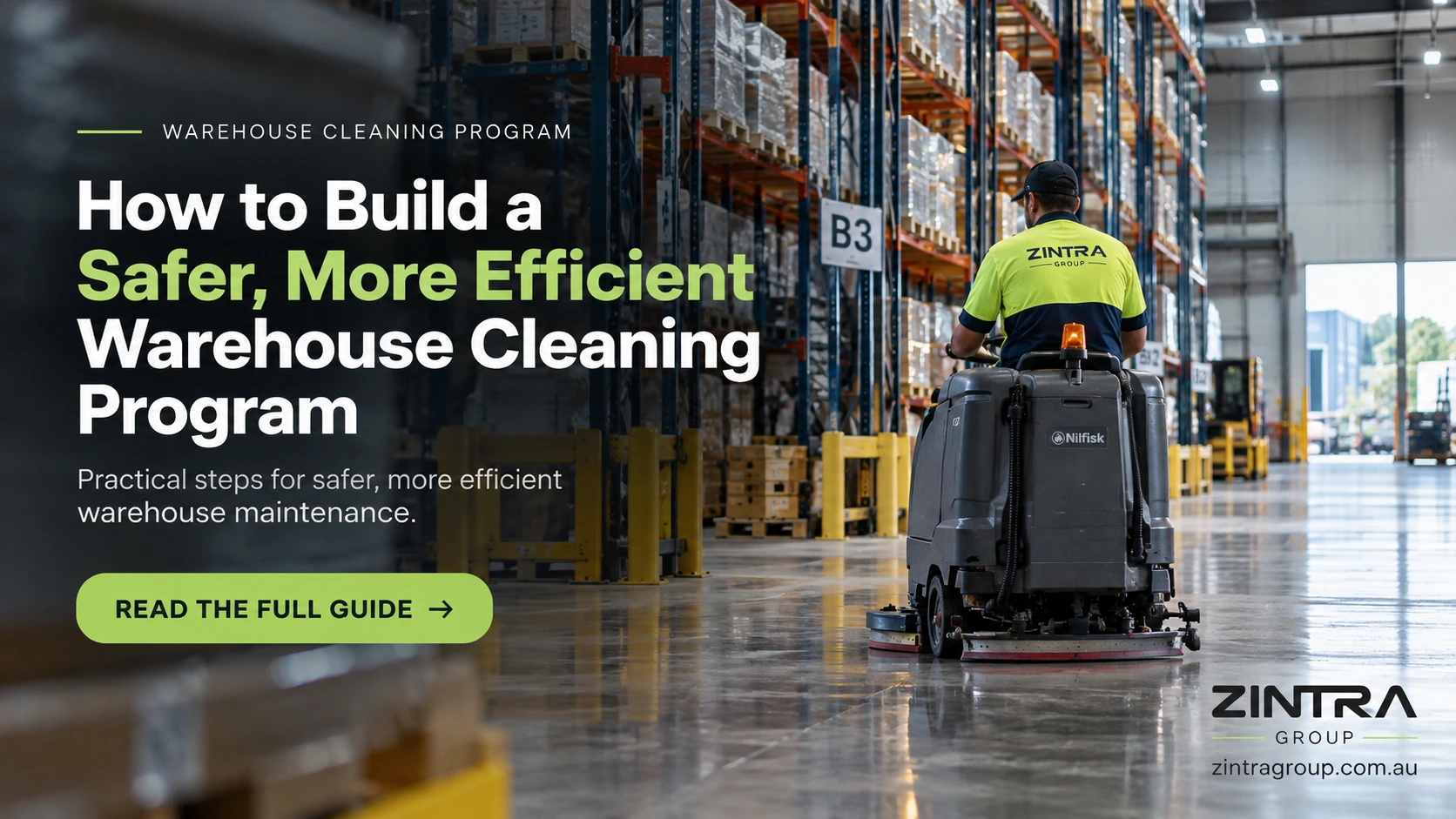
A warehouse cleaning program should do more than make floors look presentable. In a busy warehouse or distribution facility, cleaning affects workplace safety, operational efficiency, hygiene, and the property’s overall condition.
Dust can accumulate on racking and high-level surfaces, while packaging debris, tyre marks, oil and other contaminants can build up on warehouse floors. When cleaning is handled only when problems become visible, small maintenance issues can quickly become more difficult to manage.
The solution is a structured cleaning program based on how the facility actually operates.
Start With a Warehouse Cleaning Assessment
Every warehouse has different requirements. A small storage facility will not need the same cleaning program as a high-volume logistics centre operating multiple shifts.
Before creating a schedule, consider:
- Warehouse size and floor surfaces
- Forklift and vehicle traffic
- Loading and dispatch areas
- Storage and racking
- Staff facilities
- Waste collection areas
- External hard surfaces
- Operating hours and shift patterns
This assessment helps determine which areas need daily attention and which can be managed through weekly or periodic cleaning.
Prioritise High-Traffic Areas
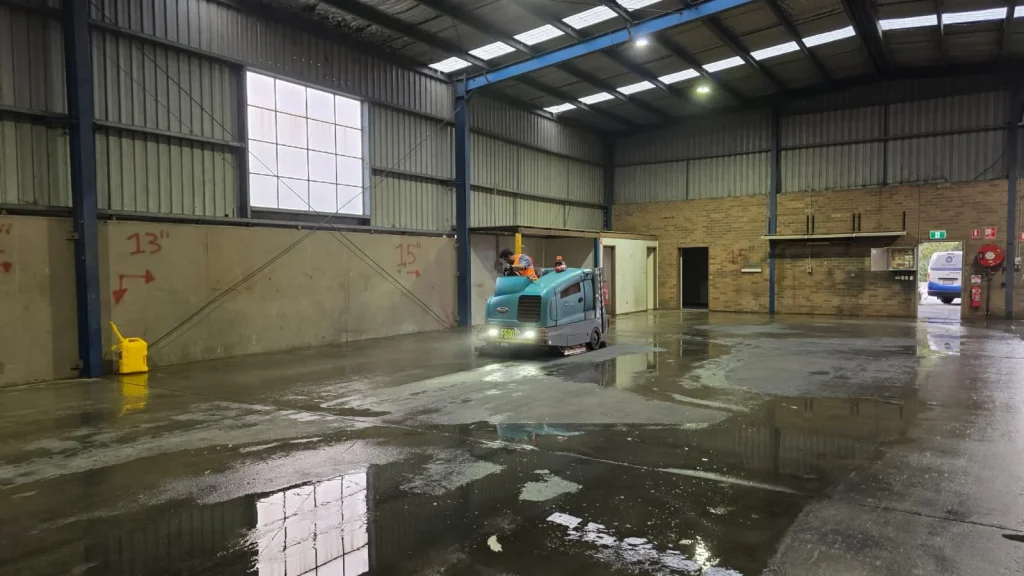
Warehouse floors experience constant movement from forklifts, pallet jacks, vehicles, and employees. As a result, they can quickly collect dust, dirt, packaging material, and other debris.
Routine sweeping should form the foundation of floor maintenance, but some facilities also require mechanical scrubbing or periodic deep cleaning.
Large warehouses can benefit from commercial equipment such as ride-on sweepers and scrubbers, particularly when extensive floor areas need to be maintained efficiently.
The goal should not simply be to clean the floor after it becomes visibly dirty. A good program keeps high-traffic areas consistently manageable.
Pay Attention to Loading Docks
Loading docks and dispatch areas often become dirty faster than other parts of a warehouse.
Vehicles, pallets, forklifts, and packaging constantly move through these zones, bringing additional dirt and debris into the facility.
For this reason, loading areas should have clearly defined cleaning requirements rather than being included as an afterthought.
Cleaning can also be scheduled around delivery and dispatch periods so maintenance does not unnecessarily interfere with normal operations.
Don’t Ignore High-Level Dust
Warehouse cleaning is often focused on the floor because that is where dirt is most visible.
However, dust can also accumulate on racking, beams, pipes, ledges, lighting fixtures,s and other high-level surfaces.
These areas should be included in periodic inspections and cleaning plans where site conditions require it.
The frequency will depend on factors such as the warehouse environment, stored materials, ventilation, and dust levels.
How Often Should a Warehouse Be Cleaned?
There is no single cleaning frequency suitable for every warehouse.
A useful program can divide work into three levels.
Daily Cleaning
Depending on the facility, this may include:
- High-traffic sweeping
- Debris removal
- Spill response
- Waste management
- Loading-area housekeeping
- Staff amenities
Weekly Cleaning
This may include:
- Mechanical floor scrubbing
- Detailed operational-area cleaning
- Additional loading-zone cleaning
- More thorough amenity maintenance
Periodic Cleaning
Longer-term maintenance may include:
- High-level dusting
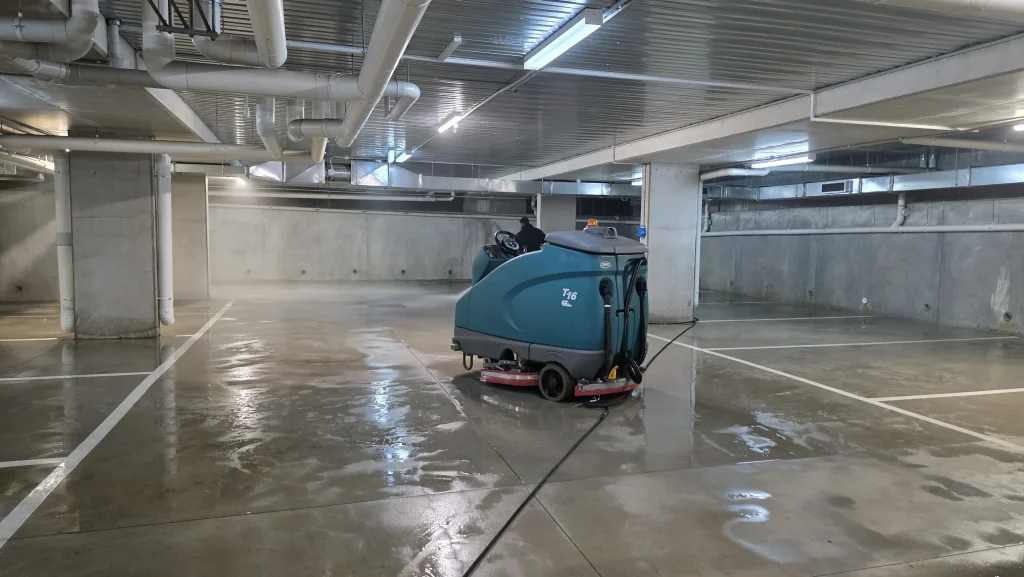
- Pressure cleaning
- Deep floor cleaning
- Car park cleaning
- External surface maintenance
The frequency should be reviewed whenever traffic levels, operating hours or warehouse conditions change.
Schedule Cleaning Around Operations
A warehouse may operate during the day, overnight or across multiple shifts. Cleaning during peak activity can create unnecessary disruption. A better approach is to schedule cleaning around the business.
Depending on the facility, this could mean early-morning, evening, or weekend cleaning. Larger warehouses can also be divided into zones so different areas are cleaned without interrupting the entire operation.
The most effective cleaning program is not necessarily the one with the most cleaning hours. It is the one that maintains the facility without unnecessarily interfering with productivity.
Make Cleaning Part of Your Safety Process
Good housekeeping can contribute to a more controlled working environment.
Loose debris, spills, obstructed access areas and poorly maintained surfaces can create unnecessary hazards for employees, contractors and visitors. Cleaning teams and facility managers should therefore identify areas where housekeeping and safety overlap.
This can include:
- Prompt spill response
- Clear access routes
- Regular loading-area maintenance
- Controlled cleaning around forklift traffic
- Appropriate procedures when floors are being cleaned
Cleaning should support the wider facility-management process rather than operate separately from it.
Document the Cleaning Program
A commercial cleaning program should clearly define what is expected.
A useful scope can include:
- Areas covered
- Cleaning tasks
- Frequency
- Equipment requirements
- Periodic services
- Site-specific instructions
- Reporting procedures
Documentation creates accountability and makes it easier to identify missed tasks or adjust the program when the warehouse changes. It is also useful when different managers, contractors, or teams are involved in maintaining the facility.
Avoid These Common Warehouse Cleaning Mistakes
Many warehouses make the same mistakes:
Cleaning only when something looks dirty.
Visible dirt is not a reliable maintenance schedule.
Using the same frequency everywhere.
High-traffic areas usually require more attention than low-use zones.
Ignoring high-level surfaces.
Dust accumulation is not limited to the floor.
Cleaning during peak operations.
Poor scheduling can make cleaning disruptive rather than helpful.
Focusing only on floors.
Loading docks, amenities, storage areas,s and external surfaces also need consideration.
Build a Program Around the Facility
A warehouse cleaning program should be based on the actual requirements of the property rather than a generic checklist.
Start by identifying the areas that experience the most traffic and contamination. Establish daily, weekly, ly and periodic tasks. Schedule work around operating hours, document the scope, and review the program whenever the facility changes.
For Melbourne warehouses and industrial facilities, this approach can provide greater consistency while helping businesses maintain their properties without unnecessary disruption.
Zintra Group provides warehouse cleaning, sweeping and scrubbing, pressure cleaning and broader commercial property maintenance services across Melbourne.
If your current cleaning arrangement is inconsistent or difficult to manage, a site assessment can help determine the right cleaning frequency, scope and maintenance approach for your facility.
Frequently Asked Questions
How often should a warehouse be professionally cleaned?
It depends on traffic, facility size, floor condition, and operating requirements. High-traffic warehouses may require daily maintenance, while lower-traffic facilities may need less frequent cleaning.
What should a warehouse cleaning program include?
It can include floor cleaning, loading docks, storage areas, staff facilities, waste areas, high-level surfaces,s and external areas, depending on the property.
Can warehouse cleaning be done outside business hours?
Yes. Cleaning can often be scheduled during evenings, early mornings, gs or weekends to reduce disruption to warehouse operations.
Is warehouse cleaning different from office cleaning?
Yes. Warehouses typically involve larger floor areas, forklifts, pallets, loading zones, and industrial traffic, often requiring different equipment and cleaning methods.
What should I look for in a warehouse cleaning company?
Look for experience with industrial facilities, suitable equipment, flexible scheduling, clearly defined scopes of work, and a structured approach to recurring maintenance.